Showing posts with label Characteristics of rain forests. Show all posts

XINGU TRIBE IN THE MIDDLE AMAZON RAIN FOREST

Amazon forest is one of the world's tropical forests in the Americas. Amazon Tropical Rainforest is the largest tropical forest in the world with a measure of 5.2 million km2. Around two-thirds of the Amazon tropical rain forest in Brazil, most of these forests include several countries namely Bolivia, Peru, Ecuador, Colombia, and Venezuela.

Amazon forest has a variety of flora and fauna as well as have high biodiversitas. The Canopy height measuring between 20-50 m, this is starta trees on top. All Species in the amount of trees per hectare can be found more than 280 species of trees. In addition to a diverse variety of flora are also various special fauna of the Amazon jungle.

In the Amazon jungle there is a large and long river named as forested namely the Amazon River. River of life around a giant snake named "Anaconda Snake" can reach a length of 9 meters. In the cinema shown that these snakes prey on humans by means of wind up helpless prey and swallow it.
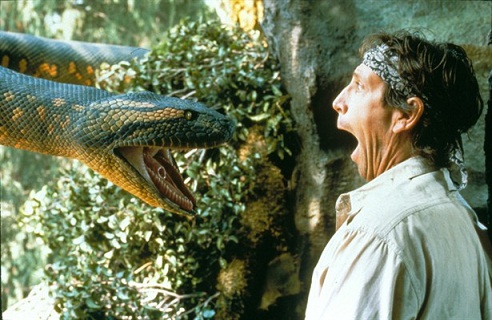

ular anakonda


But the more interesting thing in the middle of the Amazon jungle there Xingu tribe who still live without the use of clothing. Although their lives using the technology but the culture and characteristic of this tribe still preserved.


Their day-to-day life are using advanced technology such as television, parabolic, and so forth but still no use clothing as their native culture.

Some read using glasses for blurred vision had begun. This shows that they already know and using equipment such as befits the modern man.

The ceremonies performed XINGU tribe as customs and traditions continue to be preserved and conserved.
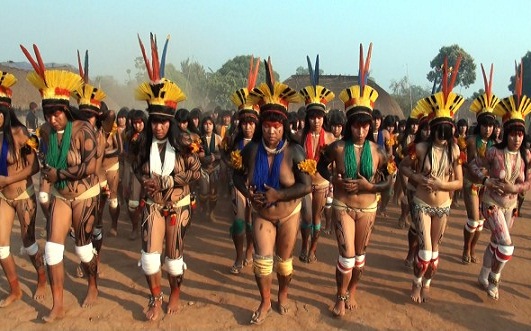

suku xingu amazon

Body tribe in the Amazon jungle is tinged with a wide range of traditional tools and materials. According to their body color is a way to give them the differences between animals, that they profess belief.

Young woman with her legs must be marked using the tools and carded to remove the blood.


To reach the location of their residence should use aircraft or even pass the river far enough.
That glimpse XINGU tribe living in the middle of the Amazon tropical rain forest. They still keep their styles and traditions of their lives, as a unique case received much attention various media and is the subject of interest to the tourist.

Read Also :

SPECIES DIVERSITY | Tropical Rain Forests Are More Biologically Diverse

Tropical rain forests are more biologically diverse than any other biome, lying at the extreme of a latitudinal diversity gradient that extends from the poles to the tropics. High species diversity in tropical forests is perhaps most impressively illustrated by the results of surveys of insects obtained using canopy fogging with broad-spectrum insecticides. 


A landmark study by Terry Erwin sampled the canopy of a single Luehea seemannii tree in Panama, finding 163 species of beetles (Coleoptera) co-occurring in this one tree. Through a series of extrapolations (based on estimates of the total number of world tree species and the proportion of insect species comprised of beetles), Erwin estimated that there may be 30 million species of insects occurring in the tropical forests of the world. This figure implies that 495% of the earth’s species remain to be described. 

While more recent sampling efforts have tended to yield lower estimates of tropical insect diversity, there are conservatively between 5 and 10 million species. This quantity is 5-to 10-fold greater than all species described to date. Thus, while tropical forests occupy only 7% of the earth’s land surface they are thought to contain over half of all of the species on the planet. The idea that species diversity of tropical animals (which are mostly insects) is a simple function of the number of plant species also implies that any effort to explain tropical diversity in general must, first and foremost, address the problem of the origin and maintenance of plant diversity.

LOWLAND EVERGREEN RAIN FORESTS

The tall, lush evergreen forests envisioned by most when referring to tropical forests are lowland evergreen rain forests. These forests are characterized by canopies with multiple layers of vegetation and the presence of large canopy emergent trees. Lowland evergreen rain forests generally have very high species diversity, with over 1000 tree species per square kilometre found in the richest forests of Amazonia and southeast Asia. Canopy and emergent trees in lowland evergreen forests often have large spreading crowns with a radius of >20m at maturity, can grow to more than 1min girth, and commonly possess plank-like buttresses important in physical support.


Beneath the upper canopy layer are smaller understorey trees, treelets, and a layer of herbaceous ground vegetation. Cauliflory and ramiflory are especially common among understorey trees in lowland tropical rain forests. One also generally finds abundant lianas; woody climbers that germinate in the understorey, but possess climbing mechanisms (such as tendrils or hooks) that allow them to use free-standing trees as support structures. Lianas that reach the canopy thus remain anchored to the forest floor.

Also common are epiphytes; plants that live on other plants (most often trees), but which at no point in their life history are rooted in the ground. Orchids, ferns and bromeliads provide many examples of tropical epiphytes, which enhance tropical diversity immensely (epiphytes are thought to comprise 10% of all vascular plants). Another group of plants characteristic of tropical forests are hemi-epiphytes, which germinate in the canopy, as do epiphytes, but produce roots that grow down the trunk of the host tree to become rooted in the ground. The most important group of tropical hemi-epiphytes are figs (many species of Ficus), the fruits of which are an important resource for many vertebrate species.

TROPICAL FOREST FORMATIONS


The main types of tropical forest are distinguished by differences in the distribution of rainfall throughout the year, by elevation, and by soil type. Tropical forests that experience ever-wet conditions with no month receiving less than 100mm of precipitation are generally referred to as ‘tropical rain forests’, although a distinction is also sometimes made between tropical ‘moist forests’ and ‘rain forests’ in a strict sense that receive annual rainfall in excess of 4000 mm.

The two other main tropical forest types, ‘tropical dry forests’ and ‘semi-evergreen rain forests’, experience an annual dry period. In tropical dry forests (also called ‘monsoon forests’) the dry period is severe, and during this most trees drop their leaves in order to reduce water loss. In semi-evergreen rain forests the seasonal drought is less extreme, and a leafless period does not occur to the same extent.

Within these broad moisture regimes, tropical forests are subdivided on the basis of elevation and soil type, and corresponding differences in forest structure. The distinguishing structural characteristics include canopy height, crown layering and the presence (or absence) of different climbers and epiphytes. Tree buttressing, crown shape, leaf structure, and position of flower/fruit formation are other important physiognomic descriptors of tropical forests.

On a global basis the most important types of tropical moist forest include lowland evergreen rain forests, upper and lower montane rain forests, heath forests, peat swamp forests, freshwater swamp forests and mangroves.

DISTRIBUTION PATTERNS TROPICAL RAINFOREST


The Tropical forests exist with some essential facts of geography and climatic systems. By definition, ‘the tropics’ lie between 23o N and 23o S latitude, the area within which the sun lies directly overhead at some point in its seasonal progression.

The flux of solar energy within this region is high, due to the fact that incoming sunlight is projected at a 90o angle to the surface of the earth. This high solar energy flux results in a high rate of water evaporation over the tropical oceans and of evapotranspiration over tropical land surfaces.


The result is a rising column of warm, moist air at tropical latitudes. As this air rises it cools as a result of the gradient in air pressure through the atmosphere (adiabatic cooling). Water condenses out from this air mass, generating rainfall. The air mass ultimately dries out, and is carried poleward from the tropics as a part of wind circulation patterns known as Hadley cells.

At subtropical latitudes near 23–30o N and S, the now-dry air mass descends, creating a region of high pressure that corresponds closely to the world distribution of deserts. As a consequence of these climatic circulation patterns, the earth’s equatorial zone is warm and wet, corresponding to the broad band of tropical forests found along the earth’s equatorial axis.

WHAT IS THE TROPICS | Tropics Are The Regions Of The Earth


Tropics are the regions of the earth that lie within about 1,600 miles (2,570 kilometers) north and 1,600 miles south of the equator. Two imaginary lines, the Tropic of Cancer and the Tropic of Capricorn, form the boundaries of the tropics. The Tropic of Cancer is 23° 27' north of the equator, and the Tropic of Capricorn is 23° 27' south of the equator. These lines mark the northernmost and southernmost places on the earth where the sun ever shines directly overhead.

Most places in the tropics have warm to hot temperatures the year around. Tropical places near sea level are hot because every day the sun's rays shine almost straight down at noon. Such direct rays produce higher temperatures than do slanted rays.

The temperature does not change much in the tropics because the amount of daylight differs little from season to season. At the equator, the sun shines about 12 hours a day. At the edges of the tropics, daylight varies from about 101/2 hours a day in winter to about 131/2 hours a day in summer. Places at the edges of the tropics have cool periods in winter. Tropical places that are located at high altitudes are cool because the temperature drops about 31/2 °F per 1,000 feet (2 °C per 300 meters) of elevation.

Many tropical areas have definite rainy and dry seasons. Most places near the equator get much rain during all seasons and are covered by tropical rain forests. Farther to the north and south, one or two short dry seasons occur yearly. Such areas have forests of trees that lose their leaves during these dry seasons. Areas even farther from the equator have one long dry season each year. These areas are covered by savannas (grasslands with scattered trees and shrubs).

CHARACTERISTIC OF INDONESIAN RAINFORESTS


Most of the natural forests in Indonesia, including in tropical rain forests. Tropical rainforests have characteristics that are different from other forests. Indonesia is an archipelago that has over 17,500 islands spread from Sabang to Merauke. Diverse place to grow from forests in Indonesia make Indonesia's tropical forests have a special characteristic of the forest than in the other hemisphere.

Many experts mendiskripsi tropical rainforests as a specific ecosystem, which can only stand firmly with the links between the constituent components as a unified whole. The linkage between the constituent components allows certain forms of forest structure that can provide a specific function as well as economic stability, high biological productivity, hydrological cycles are adequate and others. The reality on the groung, forest type has a very low soil fertility, soil composed of negatively charged clay particles such as kaolinite and illite low.

The condition of forest land also shows the uniqueness and distinctive characteristics. The biological activity of the soil rests on a layer of soil over the top (top soil). The biological activity of these about 80% are in top soil only. The facts indicate that the tropical rainforest ecosystems are fragile ecosystem, because each component can not stand alone. Besides, it was found that some other phenomenon is the existence of high diversity between sites or groups of both the forest and the growth of vegetation (Marsono, 1991).

From these characteristics make tropical forest in Indonesia is very prone to degradation. Tropical forest destruction in Indonesia is estimated at 2 million hectares per year. Tropical forest destruction in Indonesia is caused by various factors both from parties only seek profit alone or from the way management of tropical forests is wrong, because they do not understand about the characteristics of tropical forest itself.

Reduction efforts and prevention of tropical forest destruction in Indonesia is an urgent matter. Otherwise tropical forests will be lost due to logging activities, mining, human settlements, agricultural land clearing, forest fires and conversion to other forms.

Characteristics of Rainforests

Characteristics of rain forests, The temperature in a tropical rain forest varies little. It rarely rises above 95 °F (35 °C) or drops below 64 °F (18 °C). In many regions, the average temperature in the hottest month is only 2 to 5 Fahrenheit degrees (1 to 3 Celsius degrees) higher than the average temperature in the coldest month. Most rain forests receive more than 80 inches (203 centimeters) of rain annually. Some areas may receive more than 250 inches (635 centimeters) of rain each year. Thundershowers can occur more than 200 days a year.

Rain forest soils vary greatly from place to place. In many areas, the soil is acidic and infertile because years of heavy rains have washed out most of the nutrients (nourishing substances). Most rain forest nutrients are part of living plants. Small amounts of nutrients occur in a thin layer of topsoil that contains decaying vegetation.

Rain forest trees have developed several ways of capturing nutrients. For example, they obtain nourishment from rainwater that collects in their leaves or along their trunks and branches. They also withdraw nutrients from their old leaves before they shed them. The roots of most rain forest trees grow close to the surface and quickly absorb soil nutrients before they wash away. Special fungi called mycorrhizae grow in or on many of the roots and help them absorb minerals from the soil.

Rain forests grow in four major layers: (1) the canopy, or top layer; (2) the sub-canopy, a layer of trees just below the canopy; (3) the understory, a shady lower area; and (4) the floor. The tallest trees, known as emergents, grow more than 165 feet (50 meters) tall. The crowns (tops) of these trees dominate the canopy. Emergents receive the greatest amount of sunlight, but they must endure high temperatures and strong winds. The crowns of other trees in the canopy usually form a nearly continuous covering of leaves 65 to 165 feet (20 to 50 meters) above the ground. Some tall trees have large growths called buttresses that extend from the base of the trunk and help support the tree.

More than 70 percent of rain forest animal and plant species reside in the canopy and sub-canopy. Many tree branches have a dense covering of epiphytes, plants that grow on other plants and obtain nourishment from the air and rain. Vines called lianas often climb on or around the trunks and branches of trees.


The shady understory shelters small palms, young trees, and herbaceous (nonwoody) plants that can grow in dim light. Many popular house plants, such as philodendrons, dieffenbachia, and ferns, are developed from species that live in this area. Some scientists believe only 1 percent of the sunlight available to emergent trees reaches the understory.

A thin layer of fallen leaves, seeds, fruits, and branches covers the forest floor. This layer quickly decomposes and is constantly replaced.

The layers of a rain forest continually change. Large old trees die and fall to the ground, leaving a gap in the canopy. Direct sunlight penetrates through to the understory and stimulates the growth of seedlings, saplings, and small trees below. The small trees slowly stretch upward into the canopy. As they branch and expand their crowns, they fill the gaps in the canopy. A mature rain forest consists of a mixture of closed canopies, gaps, and patches of growing trees where the canopy is being rebuilt. The regeneration of many rain forest trees depends on gaps developing regularly in the canopy.

Plants and animals. About 45 percent of the world's plant species occur in tropical rain forests. Scientists have counted over 250 species of trees in small areas of Asian and South American rain forests. A similar plot of land in a northern temperate forest would have only about 10 to 15 tree species. In addition to trees, rain forests support a great variety of bamboos, herbs, and shrubs. Climbing vines, ferns, mosses, and orchids grow directly on the trunks and branches of large trees.

Because of continual moisture and warmth, tropical rain forests stay green all year. Most rain forest trees continually lose old leaves and grow new ones. Only a few species lose all of their leaves for a brief period.

Fish, amphibians, reptiles, birds, and mammals abound in the rain forest and its rivers. However, insects rank as the most plentiful rain forest animals. An individual tree in a South American rain forest may support more than 40 species of ants. Scientists have counted about 1,200 species of beetles living in only 19 tree crowns from Panama.

Plants and animals in the rain forest depend on one another for survival. Many animal groups, especially insects and birds, pollinate the flowers of rain forest trees. Such animals receive food from the flowers' nectar. In return, they pollinate the next flowers they visit. Some trees rely on only one species of insect for pollination. Many rain forest trees also depend on animals to disperse their seeds. In the Amazon rain forest, fish disperse the seeds of some trees.
Related Posts Plugin for WordPress, Blogger...

Entri Populer